.png)
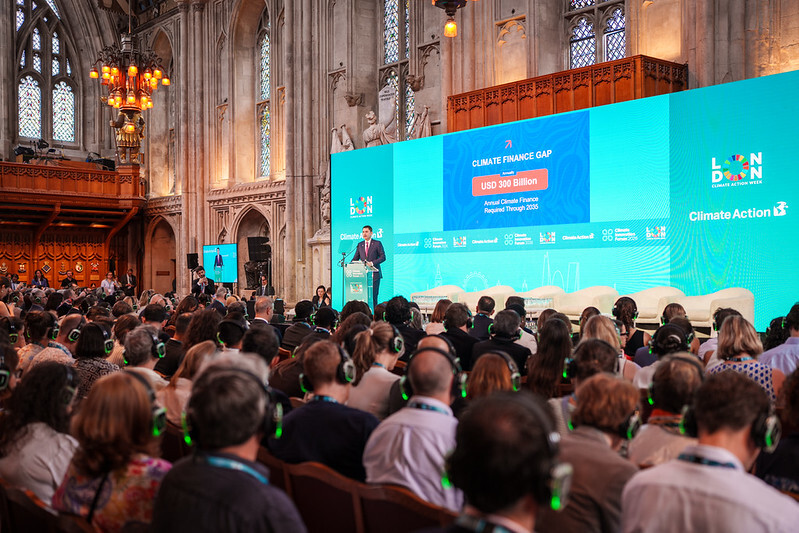
Our Co-Founder, Daniela Menzky, attended this year's Climate Innovation Forum, held on 22 June at Guildhall as the flagship event of London Climate Action Week. Running across five stages, the event brought together leaders from policy, business and finance with a clear aim: to close the implementation, innovation and finance gaps standing between us and a resilient, net-zero world by 2050. Taking place midway between COPs, the event offered the opportunity to take stock of challenges and progress.
Two themes dominated.
Energy transition took centre stage. Much of the agenda focused on the shift to renewables, framed against a sobering backdrop: three energy crises in the past decade. These shocks have reframed the transition not only as a climate imperative but as a question of energy security, resilience and independence. Discussion centred on accelerating the transition, electrifying transport, with China widely recognised as setting the pace. A recurring point was the scale of infrastructure investment needed to make the transition real rather than aspirational.
Adaptation was the harder conversation. The world is unfortunately on track to exceed 1.5°C and most likely reach 2°C by 2050 at the latest, speakers turned to the growing need to adapt. The figures cited were stark: annual adaptation needs framed not at $190bn but closer to $540bn, covering impacts on nature and food security.
Our view.
Ultimately, discussions centred around two things: the energy transition and what businesses can and should practically do, and the adaptation needs that too few are willing to name. The event was a useful reminder that doing one well does not excuse neglecting the other.


.jpg)
.jpg)
.jpg)





.jpg)